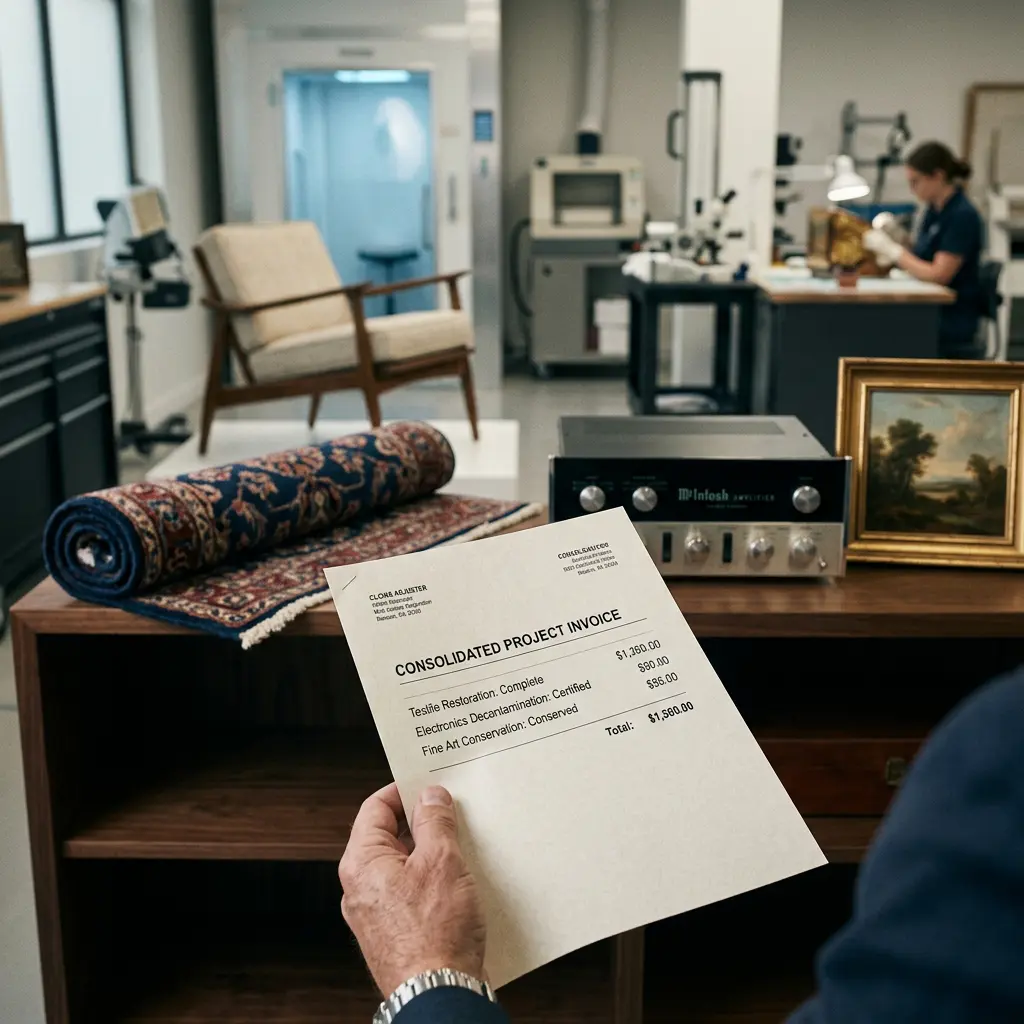


I need to tell you something most adjusters don’t know.
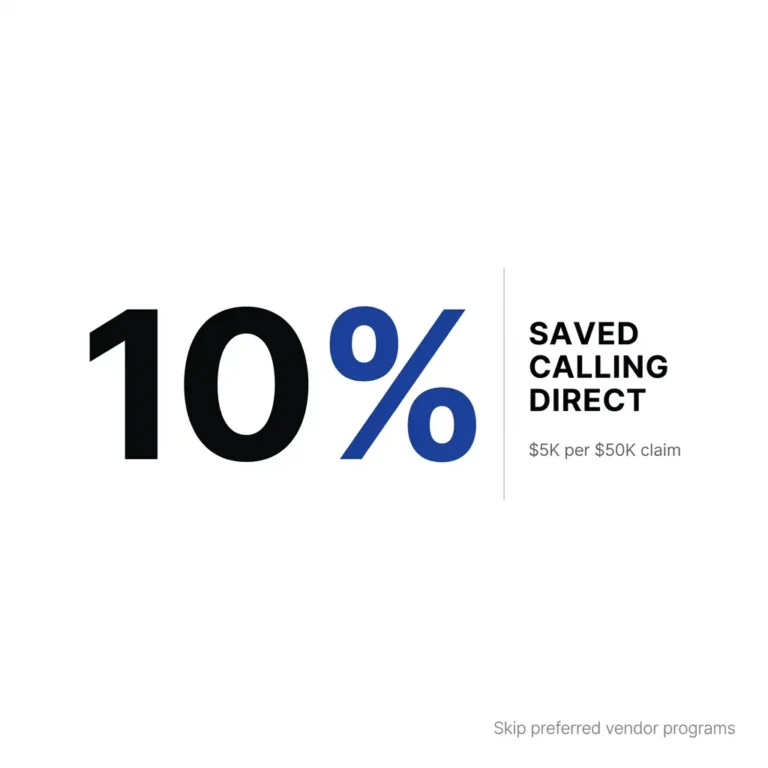
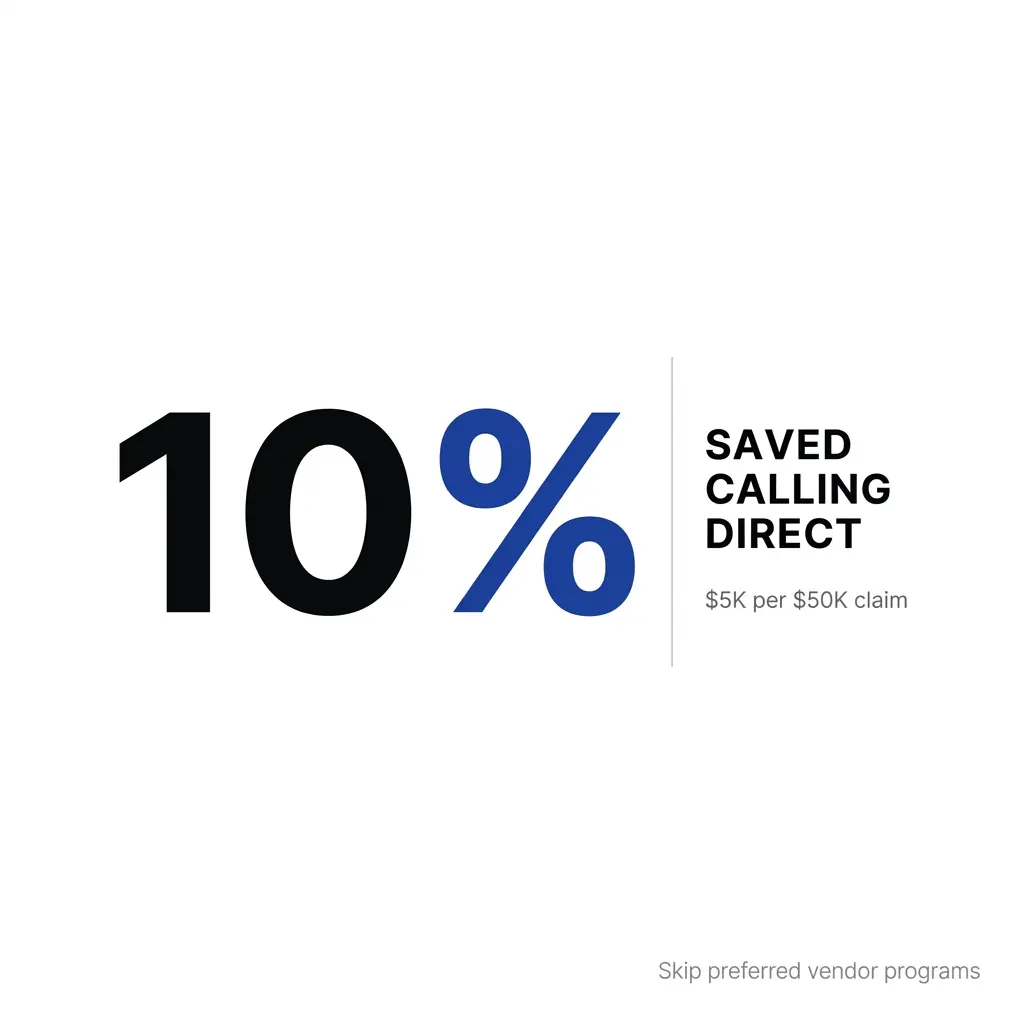
When you call a restoration vendor directly—bypassing the preferred vendor program entirely—you can save 10% immediately. Sometimes more. On a $50,000 claim, that’s $5,000. On a $100,000 claim, that’s $10,000.
You don’t need special approval. You don’t need to negotiate. You just need to pick up the phone and call the vendor yourself instead of going through the network.
Here’s why this works—and why nobody talks about it.
The Middleman Markup Nobody Mentions
Preferred vendor programs exist for one reason: to create the appearance of savings while embedding hidden costs.
Insurance companies negotiate discounted price lists with restoration vendors. The vendor agrees to work at reduced rates in exchange for referrals. Sounds good, right?
Except the vendor doesn’t absorb that discount.
They pass it forward. To get the same profit margin they need to stay in business, preferred vendors complete more jobs to offset the loss of income from working off a discounted price list. They have to move faster, cut corners where possible, and prioritize volume over precision.
Meanwhile, the program itself adds a layer of administrative cost. Someone has to manage the network. Someone has to process the referrals. Someone has to track compliance.
That cost doesn’t disappear. It gets baked into the claim.
When you call direct, you eliminate that entire structure. No program fees. No network markup. No middleman taking a percentage for coordination.
You get the vendor’s actual price—not the inflated version designed to absorb program costs.
The 10 and 10 Myth That’s Crushing Margins
Most insurance carriers operate on the “10 and 10” model—10% overhead, 10% profit. It’s treated like gospel.
But here’s the problem: no one really knows who came up with it, and it doesn’t reflect actual business costs.
A restoration contractor running a legitimate operation—with proper insurance, skilled labor, quality materials, and compliance infrastructure—operates on margins closer to 8% profit after covering real overhead. The 10 and 10 model forces them to either work at a loss or find ways to make up the difference.
Guess where they make it up?
Volume. Speed. Cutting time on each job. Prioritizing throughput over thoroughness.
When you call a vendor directly, you’re not bound by the carrier’s pricing guidelines. You can negotiate based on the actual scope of work, the real cost structure, and the quality level you need. You’re not forcing the vendor into a box that doesn’t fit the job.
You’re also not paying the markup that preferred vendors build in to compensate for the discount they’re giving the carrier.
Direct engagement removes the pricing distortion entirely.
The Conflict of Interest You Can’t See
Here’s the part that doesn’t get said out loud.
Preferred vendors have long-standing relationships with insurers—not with individual policyholders. Their priority is getting the job done within the carrier’s pricing guidelines, even if that means cutting corners or overlooking less obvious damage.
They’re not trying to screw anyone. They’re responding to the incentive structure they’re operating within.
If they push back on pricing, they risk losing future referrals. If they identify additional damage that expands the claim, they risk being flagged as expensive. If they advocate too hard for the policyholder, they risk being removed from the network.
So they don’t.
They do the work that fits the budget, close the file, and move to the next referral.
When you call direct, that conflict disappears. The vendor works for you—not the network, not the carrier, not the program administrator. They have no reason to minimize scope or rush completion. They’re incentivized to do the job right because their reputation depends on it.
Direct relationships realign incentives around quality, not compliance.
The Math on a $50,000 Claim
Let’s walk through the numbers to compare the two paths:
| Cost Component | Preferred Vendor Program | Direct Call Route |
|---|---|---|
| Base claim cost | $50,000 | $50,000 |
| Vendor discount to carrier | 10% ($5,000) | N/A |
| Vendor markup to compensate | 10% ($5,000) | No markup ($0) |
| Program administration fee | 5% ($2,500) | No program fee ($0) |
| Direct discount | N/A | 10% ($5,000) |
| Final/Adjusted Total | $52,500 | $45,000 |
The carrier thinks they’re saving $5,000. But the vendor has already built that back in, and the program fee adds another layer. The policyholder pays more. The claim takes longer. The vendor rushes to stay profitable.
You just saved $7,500 compared to the preferred vendor route. The vendor still makes their margin because they’re not giving up 10% to the carrier. The job gets done right because there’s no incentive to cut corners. The policyholder gets faster resolution because there’s no network coordination delay.
Everyone wins except the middleman—and that’s the point.
Why Vendors Don’t Advertise This
You’re probably wondering: if this is true, why don’t restoration vendors promote it?
Because they can’t.
Most vendors are locked into exclusive or semi-exclusive agreements with preferred vendor programs. If they openly advertise direct discounts, they risk being removed from the network. And for many vendors, that network represents 60-80% of their business.
They’re not going to jeopardize their primary revenue stream to save adjusters money on direct calls.
So the option exists—but it’s invisible. You have to know to ask for it. You have to know it’s even possible.
Most adjusters don’t. They assume the preferred vendor program is the best deal because that’s what they’ve been told. They assume going direct means paying more because that’s how it works in other industries.
But restoration doesn’t work like other industries.
The economics are inverted. The middleman doesn’t add value—he extracts it. The discount isn’t real—it’s a markup in disguise. The relationship isn’t aligned—it’s designed to serve the carrier, not the claim.
What This Means for You
If you’re an adjuster handling restoration claims, you have more leverage than you realize.
You can call vendors directly. You can negotiate pricing based on actual scope. You can eliminate the program fees, the network markups, and the misaligned incentives that slow down claims and inflate costs.
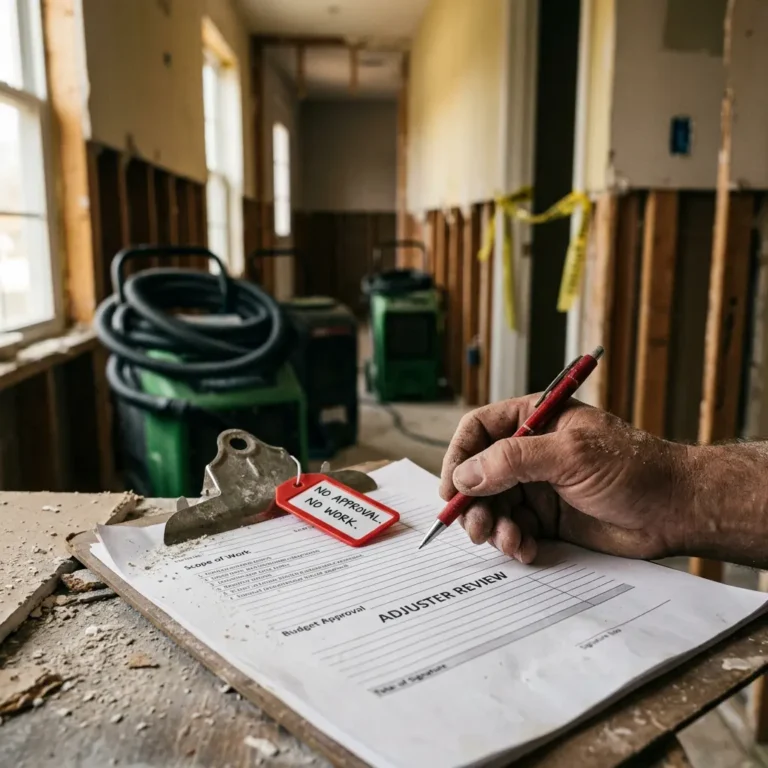
You don’t need permission. You don’t need approval. You just need to know the option exists.
At Unified Restorations, we offer a 10% direct-call discount to any adjuster who reaches out without going through a preferred vendor program. No contracts. No exclusivity requirements. No hidden fees.
You call. We quote. We execute. You save 10% minimum—sometimes more depending on the scope.
We’re not trying to replace your preferred vendor relationships. We’re offering an alternative when those relationships don’t serve the claim.
Because here’s what I’ve learned after decades in this industry: the best deal isn’t the one that looks cheapest on paper—it’s the one that eliminates the hidden costs you didn’t know you were paying.
The Bigger Pattern
This isn’t just about restoration. It’s about recognizing when intermediaries add value and when they extract it.
In healthcare, eliminating the middleman in managed medical services could save over $77 billion nationally. The principle is universal: when you remove layers between the service provider and the end user, costs drop and quality improves.
Restoration works the same way.
Preferred vendor programs were designed to create efficiency at scale. And in some cases, they do. But they also create structural inefficiencies that most adjusters never see—because those inefficiencies are hidden in markup, baked into timelines, and embedded in incentive misalignment.
When you call direct, you bypass all of it.
You get transparency. You get alignment. You get the actual cost instead of the adjusted version designed to absorb network fees.
And you get to close claims faster because there’s no coordination delay between the carrier, the program, and the vendor.
What Happens Next
You have two options.
- You can keep routing claims through preferred vendor programs, accepting the 10 and 10 markup, the network fees, and the misaligned incentives as the cost of doing business.
- Or you can pick up the phone, call the vendor directly, and ask what they charge without the program markup.
Most of the time, you’ll save 10%. Sometimes more. And you’ll get a vendor who’s accountable to you—not the network.
I’m not saying preferred vendor programs are always wrong. I’m saying they’re not always right. And when they’re not, you should know there’s another way.
At Unified Restorations, we’re ready when you are. Call us direct. Get the quote. Compare it to your preferred vendor pricing. See the difference yourself.
Because the 10% you didn’t know you could save? It’s been sitting there the whole time.
You just needed to know where to look.